Pages

Wednesday, March 06, 2013

Bath Salts Ban - "It's Working"

Source: Investigation: Ban on Bath Salts, Designer Drugs is Working Dramatically


Investigation: Ban on Bath Salts, Designer Drugs is Working Dramatically

Reported by: Evan Dawson
Set Text Size SmallSet Text Size MediumSet Text Size LargeSet Text Size X-Large
Share
Updated: 2/27 9:38 pm
Rochester, NY - 13WHAM News has uncovered new numbers that show a federal ban on synthetic drugs, including so-called "bath salts", is working dramatically.
The ban, passed last July, was designed to comprehensively stop the sale of designer drugs in smoke shops across the country. Such drugs have become a rapidly growing problem in western New York.
"The ban was really effective, particularly in New York and around the country, in getting these things out of the smoke shops, out of the convenience stores," said Dr. Timothy Wiegand, toxicologist with the University of Rochester Medical Center. "We've seen incredible dropoffs."
The numbers show that the dropoff is directly related to the timing of the federal ban in July.
13WHAM News combined the number of local calls to poison control about bath salts with the number of emergency room visits related to bath salts. Here are the totals, month-by-month, which show a surge in bath salts, followed by a steep decline after the ban:
March 2012:  23
April 2012:  30
May 2012:  42
June 2012:  81
July 2012:  104
August 2012:  29
September 2012:  19
October 2012:  3
"We certainly hoped the ban would have an impact, but this is beyond even what we might have expected," Dr. Wiegand said.
At Unity Health, outreach counselor Stephanie Rago has seen a similar decline in cases. She credits the federal ban, but also explained that local educational efforts have played a role. "The partners, the educators, are really doing their job to talk about the harm with these substances," she said. "With that, and with the recent ban, we're seeing a decrease in use."
Rago cautioned that designer drugs are not entirely eradicated. "If someone wants a certain kind of drug, they often know where to look to get it," Rago said. "This isn't over, and there's important work to be done."
So, where are all the designer drugs going, if they can't legally be sold in smoke shops anymore? Dr. Wiegand said that they're going underground, sold illegally in clubs and at concerts. Often, a person will try to buy Ecstasy or some other drug, and unwittingly get bath salts instead.
"That's potentially a big problem, and we're seeing it with some frequency," Dr. Wiegand said. "Through the dose that they've taken, they've massively overdosed. Most Ecstasy that's sold as Ecstasy in the state of New York is not Ecstasy."
Dr. Weigand explained that drug users come to have expectations about substances they're ingesting. "If it's something entirely different, they could be in trouble."
But, the experts would rather see designer drugs move away from stores where kids can get them easily. That's step one. They credit the federal ban and hope the new trend continues.

Tuesday, March 05, 2013

Designer Drug Kratom


Original Source: http://tdn.com/news/local/authorities-warn-about-designer-drug-kratom-as-debate-over-effects/article_9074e5ee-8625-11e2-87f5-0019bb2963f4.html

Authorities warn about 'designer drug' Kratom as debate over effects widens


It’s a legal and natural painkiller that produces a slightly euphoric feeling.
Or it’s a dangerous drug that may have killed a Longview woman on Monday and, earlier this week, perhaps caused a naked woman holding a baby to lunge at police with a hammer.
Maybe it’s both.
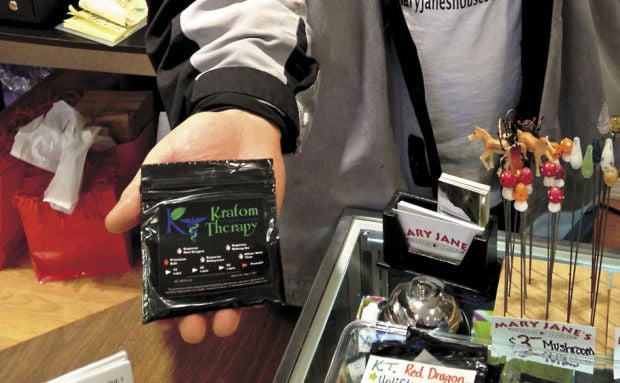
The Cowlitz County Sheriff’s Office warned the public Tuesday about the potential dangers of a plant product known as Kratom, which is commonly used for medicinal purposes in Asia and is sold in at least one Longview store.
Sheriff’s spokesman Charlie Rosenzweig said a 31-year-old woman was found dead in the bedroom of her Terry Lane home. Rosenzweig said it will take weeks to determine the cause of death, but deputies found a pipe near her body and open packets of Kratom scattered around her room, suggesting she was a heavy user.
Just two days earlier, on Sunday morning, a 27-year-old Kelso woman was hospitalized after she ran through the street naked, screaming about Jesus. Police said she swung a hammer at them while holding her four-month-old baby in her other arm. Police wrested the infant, who was uninjured, from the woman. The woman’s father said she may have taken Kratom, and a Kelso police spokesman said Wednesday that police believe the drug caused her strange behavior.
“I don’t want to overreact,” Rosenzweig said Tuesday, “but based on what we’re seeing ... we want the public to know that this product may be very risky and maybe even deadly.”
“We don’t want any more calls like the one Kelso got,” he said. “That poor child.”
But others say Kratom is harmless and couldn’t be behind the Longview woman’s death or the Kelso woman’s behavior. The product is sold at Mary Jane’s House of glass, a downtown Longview head shop, in liquid, powder and capsule forms. On Tuesday, customers said it’s effective for weening addicts off opiates, is an effective alternative to pain pills and can help people concentrate and relax.
“I’m on it right now and I’m not freaking out,” said Shaun Knudsen, 29, of Longview, who was working behind the counter at Mary Jane’s, which sells marijuana pipes, hookahs and other related products.
Some people smoke Kratom or even snort it, but that has little effect, Knudsen said. He said the most effective way to take the drug, which sells for about $1 a gram, is to simply swallow it. People who take too much might throw up, Knudsen said.
A 48-year-old Longview woman, who declined to give her name, spent $28 on Kratom capsules at Mary’s Jane’s Tuesday. The woman, who said she doesn’t drink or use other drugs, said she’d been taking the drug for about two years.
“It makes me focus. It makes me in a good mood,” she said. “I take two a day. I’ve never had a side effect. Nothing weird.”
Another customer, a 34-year-old Kalama man who also declined to give his name, said he had back surgery in 2004 and uses Kratom to replace his pain medication.
“I don’t take it every day. It helps my pain,” he said. “It’s non-narcotic. You don’t get addicted to it.”
Law enforcement officials are lumping Kratom in the same category of “designer drugs” such as bath salts and synthetic marijuana known as “spice.” Those drugs have been known to cause erratic behavior and were recently outlawed. Their manufacturers continue to tweak chemical formulas in an effort to skirt the law and continue selling them at head shops and other retailers.
Authorities said a Longview high school student was recently taken to the hospital after he began chewing on himself and exhibiting other strange behavior during class. The boy’s fellow students later said he was on spice, but that couldn’t be confirmed, police said.
On Tuesday, Rosenzweig, the sheriff’s office spokesman, said Kratom and other similar products aren’t regulated by the U.S. Food and Drug Administration, so consumers can’t know for sure what they’re ingesting.
Rosenzweig said Kratom packages, most of them open, were found scattered around the room of a 31-year-old woman who died in her Longview home Monday. The woman’s male roommate told authorities she woke up Monday, went downstairs and drank a cup of coffee, Rosenzweig said.
Later, she returned to her room and didn’t come out for some time. The roommate later found her unconscious and called 911. Paramedics couldn’t revive the woman, who was declared dead at the scene, Rosenzweig said.
Rosenzweig said the woman had medical problems, but they were not life-threatening.
“We cannot tell what role Kratom played in the woman’s death until toxicology reports are back, and that will be weeks,” Rosenzweig said in a written statement.
In the meantime, he said, “If people see some friends acting very unusual, like bizarre, and they have been using Kratom, they need to call 911 and get them medical help immediately.”

Tuesday, February 19, 2013

Intervention Canada - Crystal Meth-GHB

Found these Intervention videos on YouTube.  There is a vast amount of different "Intervention Canada" videos available.  Just do a simple research for them on YouTube.


Wednesday, January 23, 2013

DXM

DXM - (Dextromethorphan) is a cough suppressant drug that has been abused through robotripping. In high dosages, dextromethorphan acts as a dissociative hallucinogen. Visit an addiction treatment center if you are addicted to DXM.

Thursday, January 10, 2013

Krokodil: Russia's Deadliest Drug (NSFW)


Krokodil: Russia's Deadliest Drug (NSFW)


Published on May 17, 2012
A homemade drug called Krokodil is gaining popularity in Siberia and its effects on users are horrific. Krokodil is Russian for Crocodile, because of the way addicts' skin begins to get turn scaly, dry and eventually rot right off their bodies. Even most heroin users are frightened by Krokodil and want nothing to do with this terrifying drug.

Hosted by Alison Severs | Originally released in 2011 athttp://vice.com

Produced by Andy Capper

Follow Andy at http://twitter.com/andycapper

Check out the World's Scariest Drug: http://bit.ly/Devils-Breath

Subscribe for videos that are actually good: http://bit.ly/Subscribe-to-VICE
Check out our full video catalog:http://www.youtube.com/user/vice/videos
Videos, daily editorial and more: http://vice.com
Like VICE on Facebook: http://fb.com/vice
Follow VICE on Twitter: http://twitter.com/vice
Read our tumblr: http://vicemag.tumblr.com

Sunday, June 03, 2012

Zombie Apocalypse: Bath Salts Investigated by Congress as CDC Denies Zombies Exist

original post from: http://www.policymic.com/articles/9152/zombie-attack-bath-salts-investigated-by-congress-as-cdc-denies-zombies-exist

Zombie Apocalypse: 

Bath Salts Investigated by Congress as CDC Denies Zombies Exist

by Alex Marin


As fears of a possible “Zombie Apocalypse” grow by the minute in light of increasingly gruesome reports of cannibalism, the Center for Disease Control and Prevention has been forced to intervene in order to preserve whatever is left of our collective sanity.

“CDC does not know of a virus or condition that would reanimate the dead (or one that would present zombie-like symptoms),” CDC spokesman David Daigle said on Thursday, after a string of strange incidents involving seemingly non-human behavior over the last week.

In Miami, police shot a naked man after he ate the face of another man on the side of a highway. In Maryland, a college student told investigators he ate the heart and brain of a dismembered body found in his home.

In Hackensack, a man stabbed himself and threw pieces of his intestines at police. And in Canada, police are searching for a gay porn actor who allegedly killed a young man with an ice pick, dismembered the body and then raped and ate flesh from the corpse.

And now even Congress has weighed in. The Miami cannibal attack may, if lawmakers have their way, be the final straw in the fight to making sure synthetic drugs such as bath salts and synthetic marijuana are classed alongside heroin and LSD.

"Looking at the Miami incident, we've seen people do some very bizarre acts on bath salts," says Florida Republican Rep. Sandy Adams, who helped push the Combating Dangerous Synthetic Stimulants Act of 2011 through the House last December. The bill would federally ban MDPV and mephedrone, two chemicals found in "bath salts," and dozens of other chemicals found in synthetic drugs.

Last week, the Senate passed a Food and Drug Administration bill that would ban many of the same chemicals. But so far, both houses haven't been able to pass an identical bill. The hang ups have been deciding exactly which chemicals to ban, and determining if there should be "mandatory minimum" sentences for synthetic drug traffickers.

Zombie Apocalypse - Cannibal Attack - Bath Salts


It's the "zombie apocalypse" that everyone is talking about—including Congress. The Miami cannibal attack may, if lawmakers have their way, be the final straw in the fight to making sure synthetic drugs such as bath salts and synthetic marijuana are classed alongside heroin and LSD.

"Looking at the Miami incident, we've seen people do some very bizarre acts on bath salts," says Florida Republican Rep. Sandy Adams, who helped push the Combating Dangerous Synthetic Stimulants Act of 2011 through the House last December. The bill would federally ban MDPV and mephedrone, two chemicals found in "bath salts," and dozens of other chemicals found in synthetic drugs.

[Maryland Man Arrested After Killing, Eating Roommate]

Last week, the Senate passed a Food and Drug Administration bill that would ban many of the same chemicals. But so far, both houses haven't been able to pass an identical bill. The hang ups have been deciding exactly which chemicals to ban, and determining if there should be "mandatory minimum" sentences for synthetic drug traffickers.

Adams, who spent time working in the Orange County, Fla. Sheriff's office before going into politics, was imperative in getting Florida to ban synthetic drugs earlier this year. She says that hopefully the Miami incident will be the wake-up call Congress needs to get something done.

"I think that now we have to come together with the Senate and resolve whatever differences we have," she says. "We need to put a law in place that helps stop the sale and distribution of something this dangerous."

Maine Senator Susan Collins was a cosponsor of the Senate bill that recently passed. In a statement, she said Congress "cannot afford to wait to address this problem any longer."

[What are Bath Salts?]

"The longer Congress goes without enacting a permanent ban on these chemicals, the more our citizens are put at senseless risk," she says.

Many, but not all, states have taken recent measures to ban the drugs. While the Drug Enforcement Agency took emergency measures last year to make many synthetic drugs illegal, manufacturers can simply alter the chemical makeup to skirt the ban.

According to one bath salt manufacturer's website, certain products marketed as bath salts are banned in all states, others in 20 states, while some still enjoy complete legality, depending on the product's chemical makeup.

State bans can help local law enforcement prosecute synthetic drug dealers, manufacturers, and users, according to Adam Myrick, a spokesperson with the South Carolina Department of Health & Environmental Control, which played a part in banning synthetic drugs earlier this year.

"We echoed the action that had been taken by [the DEA]," Myrick says. "That state designation enables state and local law enforcement to make arrests that otherwise could only be done by federal agents."

A federal ban would also make transporting the drugs across state lines illegal. While Florida has a ban on many synthetic drugs, Adams says it used to be easy to drive to Alabama, where bath salts could, until recently, be purchased in convenience stores.

"If you do a federal ban, you won't be buying them online, if you live in Tallahassee, you won't be able to drive to Alabama or Georgia [and buy them]," she says.

Although the Miami incident served as a painful reminder of the dangers of bath salts and other synthetic drugs, Adams says it's certainly not the first time a psychotic episode has been attributed to the substances.

"These chemicals cause really severe reactions—a lot of them are violent…This is not an isolated incident, these are real things that are happening all the time." she says. "It's something we need to get focused on and get resolved."

Jason Koebler is a science and technology reporter for U.S. News & World Report. You can fol

low him on Twitter or reach him at jkoebler@usnews.com
Video: 'Naked Zombie' Cannibal Was Likely High on Bath Salts
Most Americans Are Immune to Swine Flu
How Doctors Are Using Social Media to Connect With PatientsTags: Miami, drugs

Friday, January 20, 2012

A-PVP - Legal Substitution of MDPV


a-PVP

α-Pyrrolidinopentiophenone or α-PVP is legal substitution of MDPV. MDPV itself is a research chemical also known as Methylenedioxypyrovalerone, 3,4-methylenedioxypyrovalerone. It is sometimes called as PV, Super Coke, Magic, MDPK.

a-PVPNovelty of the season!
14530-33-7
CAS: 14530-33-7
It’s a unique substitution of MDPV, legal all over the world!
Alpha-Pyrrolidinopentiophenone – is one of chemical stimulators that was discovered in 1960s. This chemical substance is closely related to pyrovalerone which is a drug that has psychoactive effect. Alpha-Pyrrolidinopentiophenone has psychoactive stimulating effect on central nervous system. The systematic chemical name of alpha-Pyrrolidinopentiophenone is 1-phenyl-2-(1-pyrrolidinyl)-1-pentanone. Its chemical formula is C15H21NO. Other chemical properties are not studied enough. Alpha-Pyrrolidinopentiophenone is classified as a stimulant that can be also called psychostimulant. Stimulants are chemical products which affect mental or physical functions, sometimes they affect both. a-PVP improves productivity, wakefulness, motivation, locomotion and endurance. Usually stimulants have temporary effect on psychoneurotic system. They are also called ‘uppers’ because of their stimulating effect on every kind of human activity. Many stimulants have relaxation effect and even may cause euphoria for short period of time. Chemical companies also warn you that a-PVP is not for human consumption it can be used for the purposes of chemical research only. It can damage your health if consumed.
copied from original website at https://www.buzz-wholesale.com/chems/a-PVP

Wednesday, October 19, 2011

U.S. Senate plans to vote on bath salts amendments

U.S. Senate plans to vote on bath salts amendments - Milford, DE - Milford Beacon


Washington D.C. —

The United States Senate is expected to vote tomorrow on an amendment to their minibus appropriations spending bill that would help fight the bath salts epidemic on a federal level.

Senator Chris Coons (D-Del) and co-sponsors Olympia Snow (R- Maine) and Richard Blumenthal (D-Conn) introduced the bipartisan legislation today that would require stronger coordination of federal law enforcement with state and local agencies to respond to the growth of synthetic drug use.

“The increased use of bath salts has ruined many lives and is growing as a destructive cancer in some of Delaware’s close-knit communities,” Coons said.

The minibus, formally known as House Resolution 2112, includes legislation for federal Department of Justice spending, said Ian Koski a spokesman for Sen. Coons’ office.

The amendment introduced today is only one of many that is preparing to make its way to the Senate floor to be voted on.

If the amendment is not considered or does not pass, there are other efforts being made by the federal government to fight bath salts.

Sen. Chuck Schumer (D-NY) introduced the Combating Dangerous Synthetic Stimulants Act of 2011, that Coons is co-sponsoring, which would make possession and sale of MPDV and mephedrone, two of the ingredients in bath salts, illegal.

Friday, September 30, 2011

Bath Salts Must Be Banned Under Federal Law

Bath Salts Must Be Banned Under Federal Law | The Exception Magazine


Bath Salts Must Be Banned Under Federal Law

Susan Collins represents Maine in the United States Senate. This is a guest op-ed and the Exception Magazine does not necessarily endorse the views expressed below.
They are called "bath salts," marketed under such appealing labels as "Vanilla Sky" and "Ivory Wave." The truth is, however, the correct name for this new breed of devastating drugs is "time bomb."
These dangerous drugs, synthetic stimulants, first burst upon the American scene last year. Since then, use has skyrocketed here in Maine and throughout the country. With the increased use of bath salts have come alarming reports of extremely hazardous and long-lasting effects.
Those effects include immediate dangers - highly elevated blood pressures, heart rates, and body temperatures, followed by psychosis, delusions, and hallucinations that lead to wildly irrational, self-destructive, and violent behavior. These psychological symptoms can persist for weeks and even months after ingestion, and can flare up without warning. Emergency rooms have reported cases in which a small army of medical workers cannot subdue people under the influence of bath salts and even large doses of sedatives do not calm them down.
During the first six months of this year, poison-control centers across the country had handled nearly 3,500 bath salt emergencies, more than 10 times the number from all of last year. Causes of death range from cardiac arrest to suicide.
In the face of this epidemic, Maine and 31 other states have banned the sale and possession of bath salts. Tragically, these harmful chemicals remain legal in the remaining states and, even worse, under federal law.
I am a co-sponsor of bipartisan legislation that would make the synthetic chemicals used to make bath salts illegal throughout the United States. The "Combating Dangerous Synthetic Stimulants Act" would ban mephedrone and MDPV under the federal Controlled Substances Act as drugs that have no legitimate medical value and a high potential for abuse.
In early September, the U.S. Drug Enforcement Agency invoked its emergency authority and instituted a ban on those chemicals, which will take effect this month and last for one year. This is a necessary step given the crisis, but it is no substitute for action by Congress to outlaw the drugs permanently.
Bath salts are a chilling example of the need to remain vigilant on drug abuse trends and to make sure that our drug laws meet emerging challenges.
These drugs are called "bath salts" because they are marketed as such, even though they bear no relation to the perfectly legal and harmless compounds that provide a relaxing soak in the tub. They are sold in some head shops, liquor stores, convenience stores, and on the Internet, at prices vastly higher than real bath salts. The packaging bears the caution "Not for human consumption," which allows dealers to skirt federal drug laws.
The legislation I have co-sponsored would close that loophole. In addition, although states can ban the sale in stores within their borders, federal action is needed to shut down the Internet pipeline.
No region of Maine has been immune to this threat. Our state's leaders, law-enforcement officials, and medical personnel deserve credit for responding quickly to alert the public to the dangers and to discourage experimentation. But this is not a battle Maine or any other state can fight alone. This is a national threat that requires national action.
So-called "designer drugs" -- new compounds created in the lab to be just different enough chemically to be legal -- are a growing and persistent threat. With the use bath salts rapidly increasing, the longer we wait to permanently ban the chemicals used to make them, the more we put people at senseless risk. The delayed psychological effects of bath salts make them a time bomb for users, and the proliferation of these dangerous drugs make them a time bomb for society.

Thursday, September 22, 2011

Maine senators co-sponsor federal bath salts bill

original source: http://bangordailynews.com/2011/09/20/politics/maine-senators-co-sponsor-federal-bath-salts-bill/

Maine’s two U.S. senators have taken notice of the bath salts epidemic in the state and are co-sponsoring federal legislation that would ban the synthetic drug.

“Disturbing reports of violent and self-destructive behavior are just the tip of the iceberg,” Republican Sen. Olympia Snowe said Tuesday of the dangerous stimulant, which began to surface in Maine last February.

She and fellow Republican Sen. Susan Collins both support the passage of the Combating Dangerous Synthetic Stimulants Act, proposed by Sen. Charles Schumer, D-N.Y., which would ban methedrone and methylenedioxypyrovalerone, known as MDPV, key ingredients of bath salts.

Bath salts are a lab-made drug that can cause hallucinations, convulsions, psychotic episodes and thoughts of suicide, police officials in Maine and other states are reporting.

“We’re seeing extreme paranoia” in people who have taken the drug, Thomaston Police Chief Kevin Haj said Tuesday. They often believe that someone is after them, he added, and also exhibit signs of psychosis.

Bath salts users are a danger to themselves, others and the law enforcement and emergency medical personnel dispatched to help them, Haj said.

Users of the drug also experience increased heart rates, agitation, anxiety, a diminished requirement for sleep and lack of appetite, Maine police and doctors have said.

“Maine hospitals reported 29 overdoses of bath salts in the month of July compared with zero six months ago,” Snowe said. “Bangor Chief of Police Ron Gastia recently reported his police department typically sees 1 to 3 incidents of bath salts use each day.”

In recent months, Bangor-area police have dealt with numerous people who believed others were out to kill them, a man who attempted to grab an officer’s gun, a woman with a knife who followed a couple in downtown Bangor and a man who attempted suicide by cop — all after consuming the drug.

A Bangor transient was charged Monday night after she knocked on a stranger’s door and told the woman who answered that she was looking for her mother, Bangor police Sgt. Allen Hayden said Tuesday. The Sanford Street resident immediately called police.

Responding officers knew right away that “something was not right in the way she was acting,” the sergeant said of Casandra Bean, 20.

Bean was found in possession of bath salts and given two tickets, one for possession of hallucinogenic drugs and one for sale and use of drug paraphernalia. She was not arrested, Hayden said.

Bath salts became illegal in Maine at the beginning of July, but those caught with the drug are issued a civil offense and dealers face only a misdemeanor charge.

Maine legislators, led by Gov. Paul LePage, are looking to stiffen bath salts penalties and the U.S. Drug Enforcement Administration is working to make three of the main components of the stimulant a Schedule 1 drug, the same class as heroin and LSD.

The DEA’s ban will take effect in early October and remain in place for at least one year while the agency and the U.S. Department of Health and Human Services study a permanent ban on methedrone, MDPV and Methylone, another ingredient of bath salts.

The federal bill supported by Snowe and Collins would make two of those components illegal much faster and on a permanent basis. They are urging quick congressional approval.

“With the use of this drug rapidly increasing, the longer we wait to permanently ban the substance, the more we put people at senseless risk,” Collins said Tuesday.

The bill has been placed on the Senate’s legislative calendar.

Public forums have been held in Bangor and Presque Isle in recent weeks to educate residents about bath salts, also known on the streets of the Queen City as “monkey dust.” Another forum, hosted by the Piscataquis Public Health Council, is scheduled for 6:30-7:30 p.m. Wednesday atFoxcroft Academy in Dover-Foxcroft.

The Knox County Community Health Coalition, Rockland District Nursing Association and Rockland Police Department will host a community training session about bath salts from 4 to 5:30 p.m. Oct. 24 at the Rockland City Council chambers.

Tuesday, September 13, 2011

Senator says DEA will place emergency nationwide ban on deadly ‘bath salts’


Senator says DEA will place emergency nationwide ban on deadly ‘bath salts’

Posted Septemeber 9, 2011 
source: http://www.empirestatenews.net/News/20110909-8.html


WASHINGTON – The United States Drug Enforcement Administration is moving to place a ban on the possession and sale of chemicals or products that contain Mephedrone, methylenedioxypyrovalerone (MDPV) and Methylone – the key ingredients of ‘bath salts’. In January, Schumer called on the DEA to ban Mephedrone and MDPV, and had subsequently introduced the Combating Dangerous Synthetic Stimulants Act of 2011 to ban them if the DEA had not acted. With today’s DEA announcement, these chemicals will be made illegal for a least one year while the agency and the United States Department of Health and Human Services (DHHS) continue to study whether these chemicals should be permanently banned. Bath salts have a similar effect on the body as cocaine and methamphetamines. The dangerous ingredients in the drugs can be snorted, smoked, and injected.

“I am pleased the DEA has finally heeded our call to ban these drugs by making them illegal controlled substances. While this is a solid first step, we need to ensure that these drugs stay off the market for good,” said U.S. Senator Charles Schumer. “I will push to permanently ban these drugs until the threat of this scourge is removed from our neighborhoods, our schools, and from store counters across the country.”

Bath Salts are sold online, at convenience stores, and in smoke shops under names like Tranquility, Zoom, Ivory Wave, Red Dove and Vanilla Sky. According to numerous reports, the chemicals found in these bath salts and plant foods cause effects similar to those caused by cocaine and Methamphetamines, including hallucinations, paranoia, and suicidal thoughts. In one case, a user was reported to have resorted to self-mutilation after abusing the substance. In several cases, users have died after overdosing or because of violent behavior.

The synthetic chemicals in bath salts are uncontrolled substances with no known medicinal purpose. The harmful impact of these powders has been recognized around the country, and a majority of states in the US have banned the substance. Countries around the world have also banned the substance, including the United Kingdom, Australia, Canada, and Israel.

In January, Schumer announced that he would be introducing legislation to ban the drugs. Schumer’s legislation would make bath salts illegal in the United States by adding the active ingredients to Schedule I of the Controlled Substances Act, which classifies drugs that are illegal and cannot be prescribed under any circumstances.

Wednesday’s announcement indicates the DEA will ban the possession and sale of bath salts nationwide. In 30 days or more, the DEA plans to issue the order, which will classify these drugs as Schedule I substances. The DEA exercised its emergency scheduling authority to temporarily control these stimulants, banning them for one year once the final order is given. The DEA reports that they had been receiving an increasing number of reports from poison centers, hospitals, and law enforcement regarding these products.

Monday, August 15, 2011

Combating Dangerous Synthetic Stimulants Act of 2011 on THOMAS

See PDF of bill (images below)


See also:  Queens Campaigner- Schumer bill to outlaw dangerous bath salts


Texas Legislation

as copied from website link


GENERAL RULES:


The controlled substances in question are typically banned or scheduled on a case-by-case basis as the governments catch up with what the latest substance being used is. However, there can be complications with analog drug acts that are in force on the federal level and several states. The Federal Analog Act is a law that has serious concerns with its vague language along with the serious weakness of being limited to banning substances intended for “internal use”.

Typically, there is no law for a specific license to sell bath salts, plant feeders, incense, or potpourri among the states. These goods are too prolific for effective enforcement of licenses. The common practice is to ban the substances in the goods. These can be identified by chemical tests and is a lot less burdensome than asking every general goods store to have a license for a handful of products.

Following substances are banned in Texas state:
CP-47,497: 5-(1,1-dimethylheptyl)-2-[(1R,3S)-3-hydroxycyclohexyl]-phenol
CP-47,497 C8 homologue: 5-(1,1-dimethyloctyl)-2-[(1R,3S)-3-hydroxycyclohexyl]-phenol (cannabicyclohexanol)
HU-210: (6aR,10aR)- 9-(Hydroxymethyl)- 6,6-dimethyl- 3-(2-methyloctan-2-yl)- 6a,7,10,10a-tetrahydrobenzo [c]chromen- 1-ol
JWH-018: 1-pentyl-3-(1-naphthoyl)indole
JWH-073: 1-butyl-3-(1-naphthoyl)indole
JWH-200: 1-[2-(4-morpholinyl)ethyl]-3-(1-naphthoyl)indole


Following substances are legal unless marked for internal use:
Buphedrone: 2-(methylamino)-1-phenylbutan-1-one, also known as α-methylamino-butyrophenone
Ethcathinone: (RS)-2-ethylamino-1-phenyl-propan-1-one, also known as ethylpropion
Mephedrone: (RS)-2-methylamino-1-(4-methylphenyl)propan-1-one, also known as 4-methylmethcathinone (4-MMC), or 4-methylephedrone
Methylone: (±)-2-methylamino-1-(3,4-methylenedioxyphenyl)propan-1-one, also known as "M1", 3,4-methylenedioxy-N-methylcathinone, bk-MDMA, MDMC


Our herbal blends, bath salts and pills are completely compliant to Texas state laws and Federal laws and possession, sale, import, export below mentioned products is completely lawful:

Blend and incense:
iHigh Black
iHigh White
Solid Incense 3g
Afghan Incense
Afghan Buzz
Afghan Fire
Afghan Ice

Party pills:
Diablo
Elevate
Exotic
Giggle
Hypnotic
Storm
Hummer

Party powder:
White Lady powder
C Original powder
Freebase powder


Information source and current status of pending bills:
Bills pending banning synthetic marijuana, methylone, mephedrone, MDPV, 3-FMC, 4-FMC, and 4-MMC have passed. Both bills take effect 9/1/2011. Synthetic marijuana classified by pharmacological effect and structure.

http://www.capitol.state.tx.us/BillLookup/history.aspx?LegSess=82R&Bill=...

http://www.capitol.state.tx.us/BillLookup/history.aspx?LegSess=82R&Bill=...

The above information reflects the legal situation in ALL cities and counties in TEXAS including the following:

Houston | San Antonio | Dallas | Austin | Fort Worth | El Paso | Arlington | Corpus Christi | Plano | Laredo | Lubbock